
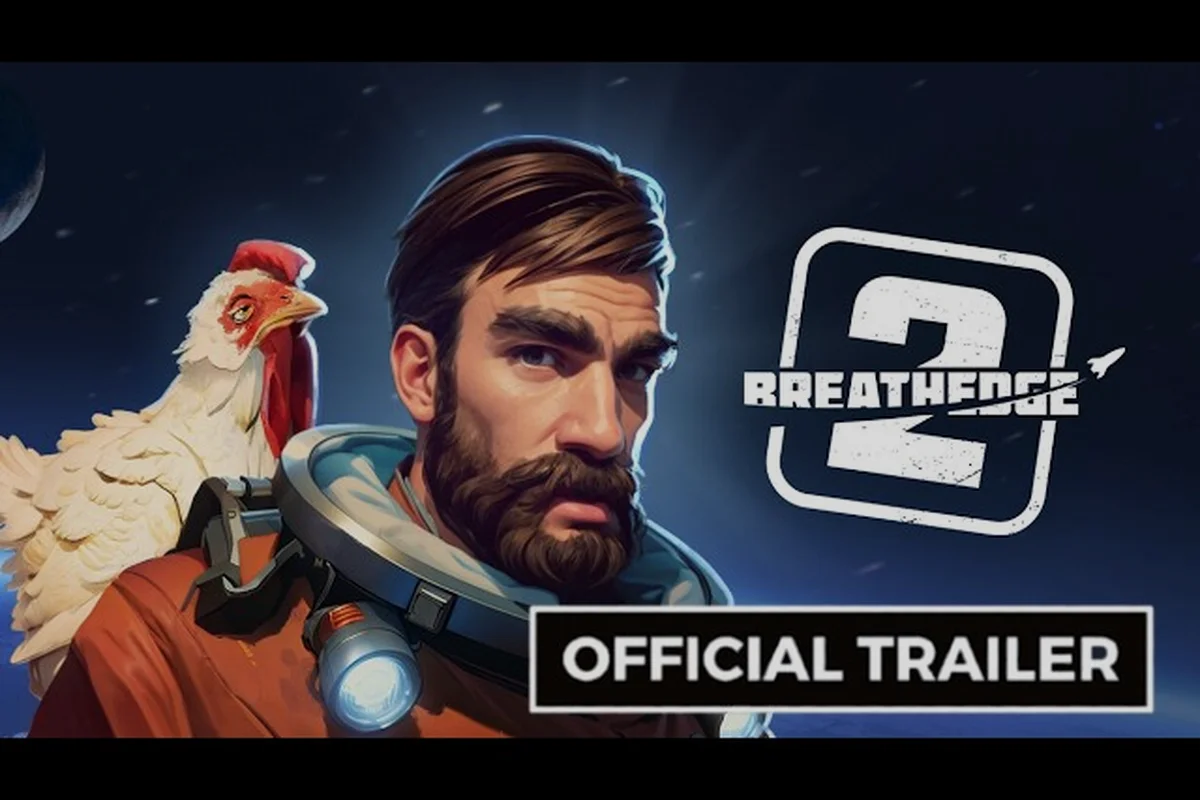
The Breathedge 2 retro futuristic universe is not a clean, chrome-plated future. It is a galaxy held together by duct tape, corporate negligence, and a stubborn refusal to die. Understanding this world building matters because the setting directly shapes every survival mechanic, from oxygen leaks to the enemies hunting you.
If you are still trying to piece together the narrative after a few hours of play, you are not alone. The game buries its most important exposition inside sarcastic item descriptions and overheard AI chatter. This guide unpacks the Breathedge 2 game lore explained through its environments, factions, and satirical design language, so you can finally see the full picture behind the Coffinbot army and the ruined settlements.
According to the official Breathedge 2 Steam page, the game expands the retro-futuristic universe with new mechanics like base building, co-op survival, and an oxygen management system that directly builds on the original’s sardonic take on deep-space endurance.
From Debris Field to Open Galaxy Worldbuilding
The original Breathedge trapped you in a debris field orbiting Earth, a claustrophobic junkyard where the nearest human was a frozen corpse. Breathedge 2 blows that scale apart. The Breathedge 2 space setting now spans multiple star systems, derelict space stations, and planetary surfaces scarred by a galaxy-wide war. According to the official store page, the Breathedge Corporation built an enormous army of Coffinbots and attacked the largest human settlements, which immediately frames this sequel as a war story rather than a survival sandbox.
This shift in scale matters for the world building. You are no longer a lone scavenger in a single orbit; you are a fugitive moving through the wreckage of an interstellar conflict. The environments themselves tell the story. Abandoned commercial stations, corporate propaganda posters, and automated security systems still following pre-war protocols all reinforce that civilization collapsed mid-sale.
Reading the Ruins: What Environmental Details Actually Signal
Every wreck in Breathedge 2 doubles as a narrative artifact. The layout of a destroyed habitat module tells you whether the residents died fighting, fled in panic, or were simply deleted by corporate cost-cutting measures. Broken vending machines, emergency oxygen masks, and child-sized space suits scattered in corridors are not random clutter; they are deliberate world building cues.
Here is how the environment communicates the state of the galaxy: every derelict corridor, shattered viewport, and frozen corpse you pass tells a specific story about where the retro futuristic civilization collapsed. Scorch marks fanning outward from a breached airlock indicate a hull decompression event, while intact ration dispensers still humming with amber status lights suggest the crew evacuated before supplies ran out. The Breathedge 2 setting layers these signals deliberately — a hallway lined with toppled cryo-pods signals a failed emergency wake sequence, and terminals still displaying pre-collapse shipping manifests reveal which sectors were cut off first. Reading these details matters because they often flag nearby hazards or salvage opportunities: a corridor strewn with deactivated repair drones typically precedes a room containing an abandoned engineering bay, and carbon scoring around a sealed blast door usually marks the nest of whatever forced the original occupants to seal it.
-
Intact advertising screens still running sales pitches imply the AI networks never received a shutdown command.
-
Coffinbot assembly lines left running suggest the Corporation never needed human workers to continue production.
-
Civilian ships welded into barricades reveal that survivors improvised defenses from anything they could find.
-
Corporate logos on military hardware blur the line between commerce and conquest.
These details matter because the Breathedge 2 world building does not rely on long cutscenes to explain itself. It expects you to notice the absurdity of a galaxy where a coffee machine and a plasma cannon share the same power socket. The retro-futuristic aesthetic is not just visual style; it is the game's primary storytelling language.
Mapping the Factions in the Breathedge 2 Retro Futuristic Universe
The Breathedge 2 retro futuristic universe is defined by competing factions, but none of them are heroic in the traditional sense. The Breathedge Corporation is the closest thing to a main antagonist, yet its motives are as banal as they are destructive. According to the official story synopsis, the Corporation's plan for a swift takeover was accidentally derailed by the Man and his suit-bound AI companion, which turned them into the number-one target of every hostile Coffinbot.
This premise sets up a strange dynamic. The Man is not a soldier or a chosen one; he is an ordinary person whose incompetence accidentally made him the galaxy's most wanted fugitive. The factions that should be his allies end up attacking him too, which raises the central mystery the early access build refuses to answer: who is Babe, and why does the Man keep surviving encounters that should kill him?
Faction Overview Table
| Faction | Role in the Story | Relationship to the Man | Key Visual Signifier |
|---|---|---|---|
| Breathedge Corporation | Galactic aggressor | Hunted by them | Corporate logos on Coffinbots |
| Coffinbot Army | Automated enforcement | Actively hostile | Mass-produced combat frames |
| AI Companion | Suit-integrated ally | Primary support | Snarky voice in the helmet |
| Human Settlements | War-torn survivors | Mixed, often hostile | Makeshift defenses and barricades |
| Babe | Unknown, highly mysterious | Unclear | Referenced but rarely shown |
This table barely scratches the surface of the Breathedge 2 what is the story question, but it clarifies one thing: the retro futuristic universe does not offer clean alliances. Every faction has its own agenda, and the Man's survival depends on navigating between them without understanding the full picture. If you want a deeper breakdown of the opening inciting incident and the Corporation's satirical edge, the first chapter story analysis maps out the early narrative beats in detail.
The Satirical Core: Why Duct Tape Defines the Setting
You cannot understand the Breathedge 2 world building without understanding its sense of humor. The game is not a parody of space survival; it is a parody of corporate culture, consumerism, and the myth of technological progress. The most reliable crafting material in the galaxy is duct tape, and the most advanced AI ever built lives inside a spacesuit that still needs manual repairs.
This satirical framing is essential to the Breathedge 2 space setting. The retro-futuristic aesthetic pulls from Soviet-era space station design, cassette-futurism, and 1980s consumer electronics, but it twists all of them through a lens of absurdity. You are not flying a sleek starship; you are piloting a patched-together wreck that leaks oxygen every time you sneeze. The Coffinbots are not terrifying in a sleek Terminator way; they are terrifying because they are mass-produced, cheap, and absolutely relentless, like a corporate downsizing initiative with legs.
The Retro-Futurist Design Language at a Glance
| Design Element | Real-World Inspiration | Satirical Twist |
|---|---|---|
| Duct tape | Universal repair tool | More valuable than advanced alloys |
| Coffinbots | Mass production | Death as a subscription service |
| Suit AI | Personal assistants | Snarky, passive-aggressive companion |
| Vending machines | Convenience culture | Source of survival gear and junk |
| Corporate ads | Marketing language | Running long after the company collapsed |
The satire is not just window dressing. It feeds directly into the Breathedge 2 game lore explained through mechanics. You are not fighting an evil empire with noble intentions; you are fighting the logical endpoint of late-stage capitalism in space. The Corporation does not want to destroy humanity out of malice; it wants to optimize the galaxy, and humanity is simply an inefficiency. This makes the retro futuristic universe feel uncomfortably plausible, even when it is also deeply silly.
The Man as an Everyman Hero Amid Retro Sci-Fi
The Man is the most deliberately ordinary protagonist in modern space games. He has no military training, no hidden destiny, and no compelling reason to be the hero. He is, according to the official early access description, an ordinary Man with perfectly ordinary space problems who accidentally became the galaxy's most wanted fugitive. This is the core of the Breathedge 2 story guide: the universe does not care about the Man, and that is precisely why his survival is funny.
His AI companion is the other half of the equation. The AI lives inside his spacesuit, which means it has a front-row seat to every panic attack, oxygen leak, and failed repair. The AI's commentary provides most of the exposition in the early game, but it is unreliable, sarcastic, and occasionally wrong. This keeps the Breathedge 2 game lore explained through dialogue rather than data logs, which suits the game's commitment to character-driven humor over cold exposition dumps.
The Man's Arc in Early Access
The first chapter of Breathedge 2 establishes three core pillars of the Man's character: his absurdly stubborn survival instinct, his improvisational engineering mindset, and his irreverent detachment from the horrors around him. The retro-futuristic universe reinforces each pillar through mechanics rather than exposition — the tutorial's salvage loop on the wrecked shuttle teaches players to treat every Soviet-era bulkhead and vacuum-sealed corpse as a resource, while the Man's deadpan voice lines during oxygen-depletion warnings signal that panic is never the intended response. This tonal foundation matters because the early-access build currently gates story progression behind these same loops, so players who skip the tutorial's engineering bench interactions in the first chapter often arrive at the Chapter 2 station repair sequence without the scrap-crafting habits the narrative assumes.
-
He is defined by improvisation, not skill. Every victory comes from duct tape, luck, and the AI's begrudging help.
-
He is a target, not a hero. The Coffinbots hunt him because he accidentally ruined the Corporation's plan, not because he chose to fight.
-
He is surrounded by unanswered questions. Who is Babe? Why did his own allies attack him? The early access build deliberately refuses to resolve these threads.
This structure makes the retro futuristic universe feel larger than the Man. He is a small, confused figure moving through a galaxy that has already moved on without him. The Breathedge 2 what is the story question is not just about plot; it is about whether one ordinary person can matter in a universe designed to render him obsolete. If you are still in the early game and want to understand the survival systems that keep the Man alive, the how to survive in space guide covers oxygen management, tool priorities, and the first-hour loop.
The Unresolved Mysteries That Define the Setting
Early access Breathedge 2 deliberately withholds answers to its biggest questions. This is not a flaw; it is a world building strategy. By leaving the Babe mystery, the ally betrayal, and the full scope of the Corporation's plan unresolved, the game forces you to engage with the setting as an active investigator rather than a passive viewer.
The most pressing unresolved threads include the fate of the Sundown station's original crew manifest, which the Normcore AI archives partially redact during the prologue's salvage tutorial, hinting at a mass casualty event buried beneath Corporate Federation propaganda. Equally murky is the purpose of the Chronos Array satellites scattered across the Bort-9 debris field, whose retro-futuristic vacuum-tube relays still broadcast encrypted telemetry on frequencies only the Gauntlet suit's Soviet-era oscilloscope can decode. These gaps matter because Breathedge 2 withholds concrete answers until mid-game, forcing players to piece together environmental storytelling from shattered Condor shuttles, leaked maintenance logs, and the unsettling silence of the Meatball-class drones that patrol abandoned orbital greenhouses.
-
Who is Babe? The name appears in official story materials but never gets a clear explanation in the first chapter.
-
Why did the Man's allies attack him? The story synopsis explicitly raises this question without answering it.
-
What is the Corporation's endgame? The galaxy-wide war is a means, not an end, but the final goal remains hidden.
-
How did the Man derail the takeover? The official description says he did it accidentally, but the specifics are vague.
These mysteries are the engine of the Breathedge 2 retro futuristic universe. They create a sense of scale and depth that would be impossible if the game explained everything upfront. The setting feels alive precisely because you do not understand it fully. The retro-futuristic aesthetic reinforces this: a galaxy built from outdated technology and corporate leftovers is inherently messy, confusing, and full of loose ends.
Timeline of the Galaxy-Wide War
| Phase | Event | Player's Position |
|---|---|---|
| Pre-war | Corporation expands quietly | Not present |
| Outbreak | Coffinbot army attacks settlements | The Man accidentally interferes |
| Aftermath | Settlements fall, survivors scatter | The Man becomes a target |
| Early Access | Man flees, allies turn hostile | Active gameplay begins |
This timeline is reconstructed from the official store page and early access materials. The game does not present it as a clean sequence of events; you have to piece it together from environmental clues and AI dialogue. That is the point. The Breathedge 2 world building trusts you to assemble the narrative yourself, which makes every discovery feel earned.
The Retro-Futurist Aesthetic as a Survival Mechanic
The Breathedge 2 space setting is not just a backdrop; it is an active participant in gameplay. The retro-futuristic technology in this universe is unreliable, repairable, and deeply flawed. Your tools break. Your suit leaks. Your ship's systems fail at the worst possible moments. This is not bad game design; it is the world building made mechanical.
Consider the durability rework announced for the April 2026 update. The developers are leaning harder into the idea that nothing in this universe works properly. Tools degrade, repairs require constant materials, and the safest strategy is to carry more duct tape than you think you need. This aligns perfectly with the retro-futurist aesthetic. In a galaxy where everything is held together by improvisation, your survival depends on your ability to patch, jury-rig, and keep moving.
How the Setting Shapes Survival Priorities
The world building directly influences your gameplay priorities in three ways: First, the retro futuristic station wreckage is densely packed with salvageable Soviet-era appliances and vacuum-sealed supply caches, so early exploration rewards you for treating every airlock and corridor as a loot node rather than a linear path. Second, the environmental storytelling—from the propaganda posters in the transport hub to the malfunctioning life support systems aboard derelict modules—frequently telegraphs which hazards (oxygen leaks, coolant spills, electrical shorts) you will face in the next room, letting you prep the right tool or consumable before committing. Third, because the game frames survival as a series of engineering improvisations inside a failing orbital facility, your upgrade priority naturally shifts toward resourcefulness tech—the multitool, the scanner, and the improvised crafting bench—before you ever invest in combat or cosmetic builds.
-
Oxygen is always scarce because the infrastructure that once supplied it is destroyed or automated without human oversight.
-
Materials are everywhere but degraded because the war scattered debris across every system, but most of it is barely functional.
-
Enemies are relentless because the Coffinbots are mass-produced machines that never sleep, negotiate, or retreat.
These constraints make the Breathedge 2 game lore explained through play, not just text. You feel the collapse of civilization every time you scramble for oxygen, patch a hull breach, or flee a Coffinbot patrol. The retro futuristic universe is not something you observe; it is something you survive.
Frequently Asked Questions
What is the Breathedge 2 retro futuristic universe?
It is a satirical galaxy built from Soviet-era space station aesthetics, 1980s consumer tech, and late-stage corporate absurdity. The setting is defined by duct tape repairs, mass-produced Coffinbot armies, and the aftermath of a galaxy-wide war started by the Breathedge Corporation, all filtered through dark comedy.
Who is the main character in the Breathedge 2 story?
The protagonist is the Man, an ordinary person with no heroic background. He accidentally derailed the Corporation's takeover plan and became the galaxy's most wanted fugitive. His only consistent ally is an AI companion living inside his spacesuit, whose sarcastic commentary drives much of the exposition.
What is the Breathedge Corporation's role in the lore?
The Breathedge Corporation is the primary antagonist. It built a massive army of Coffinbots and attacked the largest human settlements in a galaxy-wide war. The Corporation's motives are satirical: it treats conquest as a business optimization problem, with humanity as an inefficiency to be eliminated.
Why is the world building so focused on duct tape and junk?
The emphasis on duct tape, broken equipment, and improvised repairs is the game's satirical core. It mocks the myth of technological progress by showing a future where the most valuable resource is a cheap adhesive, and where survival depends on jury-rigging rather than advanced engineering.
Does Breathedge 2 explain the full story in early access?
No. The early access build deliberately leaves major questions unresolved, including the identity of Babe, the reason the Man's allies turned on him, and the Corporation's final goal. This open-ended approach makes the world feel larger and encourages players to piece together the lore from environmental clues and AI dialogue.