
This Breathedge 2 review cuts through the hype before the August 31 early access launch. The sequel removes the original's item degradation grind and expands the sandbox, which matters because survival fans need to know whether the humor still lands and the loop actually holds up. Here is the verdict based on the demo, confirmed content, and developer statements.
What the Early Access Build Actually Includes
At the start of early access, Breathedge 2 already ships with a substantial playable slice. The build includes the first major story chapter, a large explorable area, and the core survival loop that defined the original. You gather resources, craft tools, upgrade your suit, repair systems, fight off threats, and chase main and side quests. NPCs populate the world, optional locations reward exploration, and the game still throws piles of assorted junk at you that you inexplicably want to collect.
The shift from the original is not just cosmetic. RedRuins Softworks confirmed that the item degradation mechanic is gone. In the first game, your drill or oxygen tank would break after a handful of uses, which forced constant recrafting and made progression feel like busywork. Now crafting an item like a drill is a significant event. The tool stays relevant, and you upgrade it over time to expand its usefulness. This single change reframes the entire early game because resource gathering no longer feeds a disposable inventory.
Community reports from the demo build suggest the tutorial is tighter, but the sarcastic tone remains intact. You still have the immortal chicken companion and an AI that refuses to take the void seriously. The tension between absurd humor and genuine survival pressure is still the game's signature, which means players who bounced off the original's tone will likely feel the same friction here.
How the Rework Changes the Survival Loop
Breathedge 2's First Story Chapter Scope vs. the Original's Early Access Launch
Comparing the two Early Access debuts quantifies the sequel's scope jump: the 2018 Breathedge build shipped a fragment of Chapter 1 with the protagonist already adrift among corpses, while Breathedge 2's August 2026 EA build delivers the entire first major story chapter plus a large explorable area, main and side quests, NPCs, and optional events. Steam's EA FAQ frames this as "substantial playable experience" — roughly triple the narrative runway the original offered at its September 13, 2018 EA start, with crafting, upgrades, repairs, and combat all functional from day one.
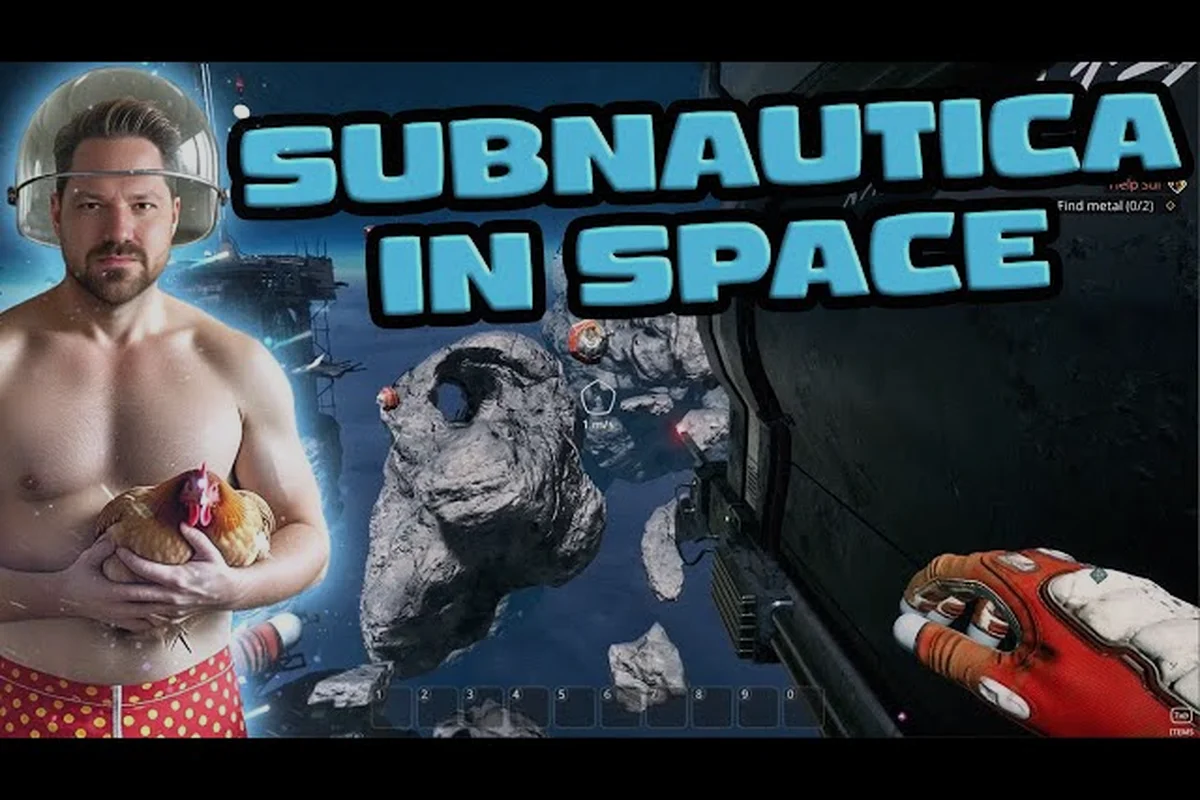
The original Breathedge drew comparisons to Subnautica in space, but many players argued the degradation system undercut the fantasy of building a stable base. Breathedge 2 answers that criticism directly. The rework pushes the game closer to a persistent progression model, where your crafted equipment becomes part of your long-term kit rather than a temporary resource sink.
Here is how the loop shifts between the two games: Breathedge (2018) gated oxygen generation, the oxygen station, and key navigation beacons behind a single, easily missed trigger near the starting wreck, forcing players to sit at 92% oxygen while backtracking through the debris field. Breathedge 2 replaces that brittle fail-state with the oxygen candle and the leak-stopper as early craftable consumables, so the survival pressure moves from "find the one item or suffocate" to "manage four leak sources during a breach event while the life-support module drains at 1.8% per second." The result is a tighter 20–25 minute loop: gather aluminum and sealant from the ship graveyard, repair the shuttle's O₂ scrubber, and bank spare oxygen candles before the next scripted hull breach — no more 40-minute restart spirals over a missed blueprint scan.
| System | Breathedge (Original) | Breathedge 2 (Early Access) |
|---|---|---|
| Tool durability | Items break after few uses | Items persist and upgrade |
| Crafting focus | Replace broken gear | Expand and improve gear |
| Progression feel | Reactive and grindy | Planned and incremental |
| Sandbox role | Limited by durability | Central to exploration |
| Early game pace | Slower due to recrafting | Faster, more exploration time |
This table matters because it explains why the sequel feels more like a space survival sandbox than a comedy-skinned inventory manager. In the original Breathedge, the drill degraded on a fixed timer, so every expedition outside the shuttle meant budgeting a spare drill, duct tape, and aluminum for repairs before you could even think about looting a wreck. The sequel shifts that pressure outward: durability still drops, but the real constraint is now where you point the tool, not how often you rebuild it. You spend less time replacing the drill and more time deciding which debris cluster, frozen corpse, or airlock panel is worth the oxygen cost of drifting over to it — which is exactly the decision-making rhythm that fans of Subnautica or No Man's Sky expect from a best space survival game in 2026.
The survival checklist guide covers the essential first-hour priorities if you want a concrete plan for launch day. It walks through oxygen, power, and the first crafting bench in the order that prevents early deaths.
Breathedge 2 Genre and Where It Sits in 2026
Calling Breathedge 2 a pure survival game undersells the blend. The breathedge 2 genre sits at the intersection of narrative-driven survival, open-space exploration, and dark comedy. It is not a hard simulation like Stationeers, nor a pure story walk like Outer Wilds. The closest genre label is probably comedic space survival with crafting depth.
This positioning matters for the best space survival games 2026 conversation. The field has grown crowded, and each title now carves a distinct lane — No Man's Sky leans into planetary exploration and base-building scale, Astroneer doubles down on whimsical automation, and The Alters pushes narrative-driven survival with clone-management mechanics. Breathedge 2, by contrast, threads comedy through every oxygen leak and hull breach, pairing the absurdist tone of its immortal chicken companion with surprisingly granular crafting trees and zero-G debris hazards. Here is how Breathedge 2 compares to its most common alternatives:
| Title | Primary Appeal | Crafting Depth | Tone | Best For |
|---|---|---|---|---|
| Breathedge 2 | Humor + survival loop | Medium-high | Satirical | Players who want laughs with pressure |
| Subnautica | Underwater exploration | High | Tense wonder | Base builders who love discovery |
| No Man's Sky | Infinite universe | Medium | Neutral | Long-haul explorers |
| Outer Wilds | Time-loop mystery | Low | Philosophical | Puzzle and narrative fans |
| Stationeers | Hard engineering | Very high | Technical | Systems simulation players |
The table shows why "games like Breathedge" is a tricky search. Few titles combine the sarcastic AI companion, the junk-collecting compulsion, and the open-void traversal in the same package. If you want the exact tone, you are mostly looking at the first game or waiting for this sequel.
What the Demo Revealed About Combat and Physics
The demo build gave players a taste of the expanded open-space traversal and the reworked combat pacing. Unlike the original, which kept combat sparse in the early hours, the sequel introduces threats earlier and gives you more tools to respond. Players report that thruster control feels more responsive, and the zero-gravity movement now includes a subtle inertia management layer that makes dodging debris more engaging.
The space suit mechanics breakdown digs into how suit integrity, oxygen, and environmental hazards interact in the current build. That article explains the suit upgrade path and why ignoring insulation in the first zone will kill you faster than any enemy.
Combat still leans into improvised weaponry rather than polished gunplay. You swing tools, launch debris, and occasionally activate jury-rigged traps. This keeps the tone consistent, but players expecting a tight shooter will be disappointed. The challenge comes from resource pressure and environmental threats, not mechanical skill ceilings.
| Combat Element | Demo Impression |
|---|---|
| Weapon variety | Limited but expandable |
| Enemy AI | Predictable, pressure-based |
| Environmental hazards | The real threat |
| Movement skill ceiling | Moderate, physics-based |
| Boss or set-piece fights | Teased, not fully shown |
This is not a negative. Breathedge 2 has never promised to be a combat-first game, and the early access build confirms that priority. The survival pressure remains the primary antagonist, and it comes from systems rather than enemies: oxygen depletion while drifting between derelict station modules, radiation spikes in unshielded debris fields, and the constant juggling of vacuum suit integrity versus inventory weight. Where the demo's combat encounters do appear—mostly automated security drones and vacuum-adapted fauna—they function less as skill checks and more as resource taxes, forcing you to spend repair foam and oxygen canisters that you would otherwise hoard for environmental hazards. That design choice keeps the tension focused on planning, route efficiency, and emergency air budgeting rather than twitch reflexes or damage rotations.
Should You Buy at Launch or Wait for 1.0?
This is the question every Breathedge 2 review needs to answer directly. Early access launches with one story chapter and a large area, which gives you a solid 10 to 15 hours of content if you explore thoroughly. The developer has not announced a full 1.0 date, and the roadmap is still thin on specifics.
Here is a simple decision framework: if you only plan one playthrough and have limited tolerance for placeholder audio, unpolished animations, or placeholder UI elements in the vacuum-builder progression, waiting for the 1.0 launch in 2026 is the safer call. If you already enjoyed the first Breathedge’s sarcastic AI companion banter and want to test the expanded oxygen-management loop, derelict-station looting, and the new durability pressure on your spacesuit before committing to a full run, the Early Access build gives you a representative slice of the core loop without the finished narrative polish.
-
Buy at launch if you loved the original, want to support the rework, and do not mind playing in chunks across updates.
-
Wait for 1.0 if you want the complete story, all crafting tiers, and the polished balance pass.
-
Buy at launch if you value the community feedback loop and enjoy seeing systems evolve.
-
Wait for 1.0 if you bounced off the original's humor and need confirmation the sequel lands differently.
The should I buy comparison expands on this with a deeper look at game length, replayability, and how the early access value compares to similar titles in the genre. For context, the current build's core story arc can be finished in roughly 12–15 hours, but players who chase the optional oxygen node upgrades and station module blueprints report pushing past 25 hours — a meaningful gap that matters if you are weighing launch-day purchase against waiting for the 1.0 content pass. Replayability currently hinges on the oxygen management loop and base-building sandbox rather than branching narrative, so the comparison also breaks down whether games like Subnautica or No Man's Sky deliver a more complete space survival package for the same price point.
One thing is clear from the demo: the rework removes the most common complaint about the original. The item degradation removal alone will win back a chunk of players who quit the first game out of frustration. If the writing still clicks for you, the core loop is now stronger.
Breathedge 2 Alternatives Worth Checking
If you are still on the fence, the breathedge 2 alternatives landscape has strong options — from the derelict-ship horror of Dead Space to the base-building loop of Subnautica — and the choice depends on which part of Breathedge 2 appeals most: the humor, the crafting, or the space traversal. Players who bounced off the oxygen-tether management and corpse-run recovery in Breathedge 2’s early hours often find No Man’s Sky’s smoother resource curve a better fit, while those who want the satire without the survival pressure can look to High on Life for a narrative-driven palette cleanser.
For the Comedy and Tone
Few games commit to absurdist humor in a survival framework. Journey to the Savage Planet is the closest tonal match, blending corporate satire with alien exploration. High on Life has the joke density but abandons survival mechanics entirely. If the immortal chicken and sarcastic AI are your draw, these are your fallback.
For the Crafting and Base Building
Subnautica remains the gold standard for underwater base construction, and its space-adjacent sequel, Subnautica 2, is in development. Astroneer offers a more relaxed crafting loop with terraforming. Space Engineers pushes the engineering depth far beyond what Breathedge 2 attempts, which is either a feature or a warning depending on your patience.
For the Open-Void Traversal
Outer Wilds delivers the best physics-based space flight and a mystery that rewards curiosity. No Man's Sky offers the largest scope, though its survival systems are shallower. Elite Dangerous provides the most realistic flight model but demands significant time investment before it clicks.
The meme game comparison explores how Breathedge 2 stacks against Outer Wilds and No Man's Sky specifically, including where the humor either elevates or undercuts the survival tension. Where Outer Wilds lets its time-loop melancholy breathe through silence, Breathedge 2 fires off a chicken-clucking intercom or a sarcastic AI jab roughly every 40 seconds, which can puncture the dread of suffocation timers and oxygen-deprivation alerts that define the genre's stakes. No Man's Sky, by contrast, treats its procedural oddities with deadpan wonder, while Breathedge 2's punchlines often undercut resource scarcity moments — like a vacuum leak interrupting a toilet-humor cutscene — forcing players to choose between laughing at the bit or scrambling for an air leak patch kit.
Frequently Asked Questions
Is Breathedge 2 a full game at early access launch?
No, it launches with the first major story chapter and one large explorable area. The developer has confirmed core survival, crafting, combat, quests, and NPCs are present, but the full narrative arc and late-game systems will arrive through updates. Expect 10 to 15 hours of content at launch.
What is the biggest change from the original Breathedge?
The removal of item degradation is the headline rework. In the original, tools broke after a few uses and forced constant recrafting. In Breathedge 2, crafted items persist and can be upgraded, which shifts progression from reactive replacement to planned expansion and makes exploration feel more rewarding.
Is Breathedge 2 a horror game or a comedy?
It is primarily a comedic space survival game with dark undertones. The sarcastic AI companion and immortal chicken keep the tone light, but oxygen management, environmental hazards, and combat pressure create genuine tension. The balance between absurd humor and survival stakes is the game's defining trait.
What are the best space survival games like Breathedge in 2026?
Subnautica for crafting depth, Outer Wilds for mystery and physics, No Man's Sky for scale, and Stationeers for hard engineering all compete in the best space survival games 2026 conversation. Journey to the Savage Planet is the closest tonal match for the humor.
Should I play Breathedge 1 before Breathedge 2?
Not required—Breathedge 2 starts a new scenario and doesn't assume you know the original's plot. Playing the first game helps, though: you'll better appreciate the rework that removes the old item-degradation grind (crafting a drill now feels significant) and the satirical tone carried into Early Access. If you're short on time, skip it.