
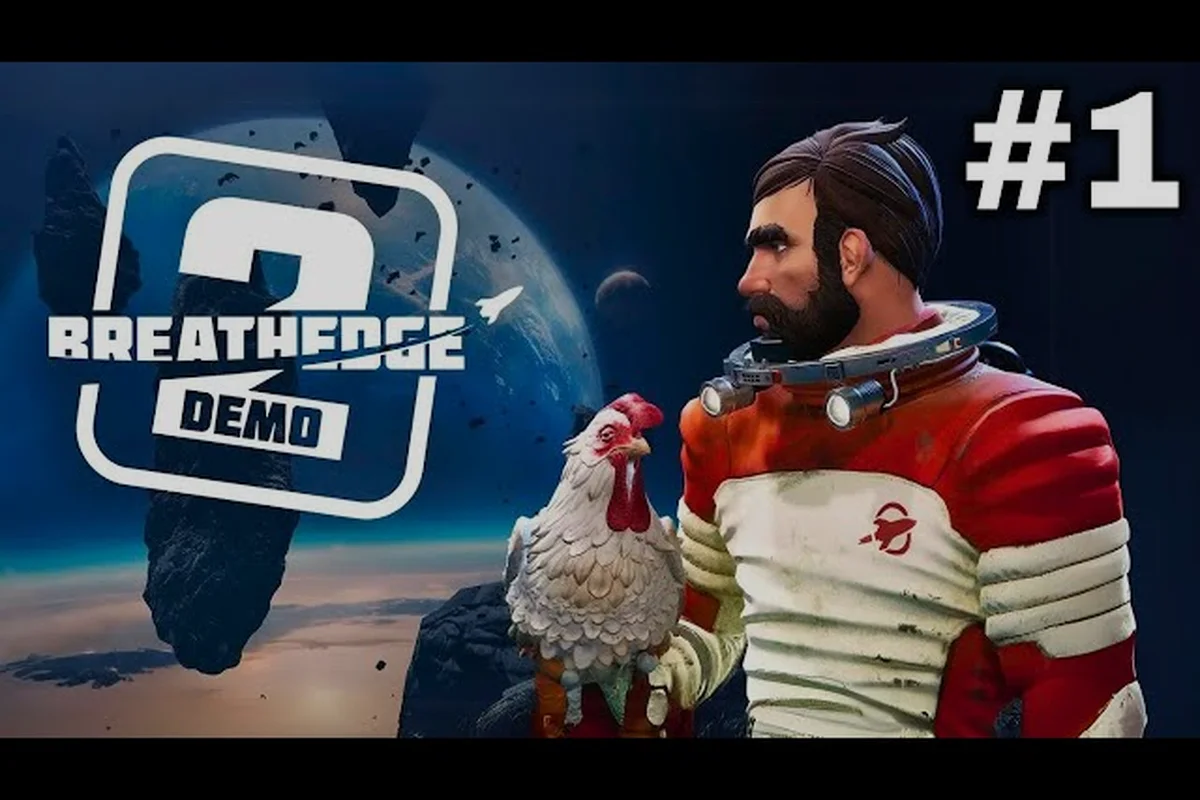
The Steam store listing for Breathedge 2 confirms the game is built exclusively around a solo campaign, with no co-op or multiplayer mode attached to the Early Access build. That matters because every survival decision, from oxygen budgeting to combat timing, lands entirely on your shoulders. If you are wondering whether you can invite a friend to float through the wreckage with you, the answer is a firm no — and this guide explains exactly what that solo experience delivers in the opening hours.
What Breathedge 2 Single Player Actually Means
The Breathedge 2 single player experience follows an ordinary Man and his sarcastic spacesuit AI as they accidentally derail a galaxy-wide war started by the Breathedge Corporation. Because RedRuins Softworks designed the sequel as a large story-driven survival adventure, the solo structure shapes every mechanic from the first oxygen warning to the final Coffinbot encounter. The official Steam store features list Single-player as the only supported mode, alongside full controller support, Steam Cloud, and Family Sharing.
This design choice is not a limitation but a deliberate pacing tool. Without a second player to split tasks, the game forces you to master inventory loops, crafting priorities, and environmental awareness in sequence. According to the official Breathedge 2 Steam page, the sequel drops you into harsh frontier space where hunted heroes survive by turning garbage into useful contraptions. That premise works because the solo player must personally learn every blueprint, repair every damaged module, and decide when to flee instead of fight.
How Solo Structure Changes Early Survival
The opening hours of the Breathedge 2 game world establish a clear tension between exploration and resource drain. When you drift through the first debris fields, the game teaches you that every meter of movement costs oxygen, and every Coffinbot skirmish costs durability. In a co-op setting, one player might scout while another crafts, but the Breathedge 2 single player format compresses those roles into one decision loop.
| Survival Task | Solo Player Burden | Co-op Alternative (Not Available) |
|---|---|---|
| Oxygen monitoring | Constant personal tracking | Split watch duty |
| Combat positioning | Kite and retreat alone | Flank or distract |
| Crafting and repair | Stop exploration to craft | Craft while partner explores |
| Inventory hauling | Carry all salvage personally | Divide loot weight |
| Boss fights | Manage aggro solo | Revive or swap aggro |
Because no co-op option exists at launch, the game balances enemy density and resource availability around a single player. Community reports from the Steam Next Fest demo noted that combat feels manageable when you use cover and oxygen pockets, but punishing when you ignore the survival loop.
Breathedge 2 Suit Upgrades and the Healing Problem
The Breathedge 2 suit upgrades system directly addresses one of the most frustrating parts of the original game. In the first Breathedge, gear degraded rapidly and broke after a few uses, which forced constant replacement. The sequel reworks this into a progression model where crafting an item like a drill is a significant event. According to PC Gamer's reveal preview, the annoying degradation mechanic was removed so crafted items stay relevant in the sandbox and can be upgraded with expanded usefulness.
Health, Healing, and Repair Loops
Understanding Breathedge 2 health and healing requires separating personal health from equipment integrity. The game does not hand out instant medkits on a cooldown. Instead, healing opportunities come from crafted consumables, environmental stations, or returning to safer zones. The Breathedge 2 how to heal question has multiple answers depending on where you are and what you have already unlocked.
| Healing Method | Availability | Solo Strategy Note |
|---|---|---|
| Crafted medical items | Mid-game blueprints | Carry at least 2 before boss zones |
| Environmental stations | Scattered in safe sectors | Plan routes around these hubs |
| Suit repair patches | Early game essentials | Use during oxygen-rich moments |
| Retreat and recover | Always available | Kite enemies to safe pockets |
| Upgrade-based regen | Late game suit mods | Reduces consumable dependency |
The new durability model means you spend less time replacing broken tools and more time upgrading the gear you already own. That shift makes Breathedge 2 suit upgrades feel like permanent progression rather than treadmill maintenance. For a deeper breakdown of which suit modules to prioritize, the suit upgrades guide covers repair costs, upgrade ordering, and how to avoid wasting rare scrap.
Why Healing Is Not Instant
A core design principle in the Breathedge 2 first chapter gameplay is that recovery requires positioning. You cannot pause and heal mid-combat like a traditional action game. Instead, you must create distance, find a pocket of oxygen, or use the environment to break line of sight. This is why solo players need to scout exits before engaging Coffinbot patrols. The Man's suit AI often delivers sarcastic warnings, but those lines double as mechanical hints about your current status.
The Breathedge 2 Game World and Its Solo Scale
The Breathedge 2 game world expands beyond the cramped corridors of the first game. Early chapters push you through open space sectors, wreckage fields, and the fringes of inhabited space where the Corporation's army has already attacked major settlements. Because the sequel is story-driven, each new sector introduces a narrative beat, a new resource type, and usually a new environmental hazard.
First Chapter Exploration Structure
The Breathedge 2 first chapter gameplay sequence teaches players how to navigate zero gravity, manage oxygen pockets, and recognize salvageable wreckage. You begin near a damaged structure and must learn the basic loop: gather scrap, return to a workbench, craft a tool, then push farther into the debris. The immortal chicken from the first game returns as a companion anchor, though its exact gameplay role in the opening chapter remains part of the satirical tone.
| Chapter Element | What You Learn | Why It Matters Later |
|---|---|---|
| Oxygen pockets | Refill timing and safe routing | Boss fights require oxygen planning |
| Scrap gathering | Identify high-value salvage | Fuel for suit upgrades |
| Coffinbot patrols | Avoid, kite, or ambush | Combat fundamentals for later zones |
| Blueprint unlocks | Craft order and tool use | Gates access to new sectors |
| Environmental hazards | Temperature and radiation zones | Forces route adaptation |
Solo Navigation and Resource Density
Resource density in the Breathedge 2 game world appears tuned for one player. That means you will not find co-op-sized loot piles, but you also will not need to split materials with a partner. Every salvage run becomes a personal risk-reward calculation. Do you grab the distant wreckage with extra scrap, or return early to secure what you already have? The game rewards methodical players who learn to read sector layouts before committing to long zero-gravity traversals.
Combat and Solo Aggro Management
Combat in Breathedge 2 single player revolves around positioning rather than button mashing. Coffinbots patrol wreckage zones and react to sound, movement, or proximity. Because you have no teammate to distract them, you must control engagements carefully. The demo showed that Coffinbot encounters punish players who drift into open space without cover, while rewarding those who use debris as line-of-sight breakers.
First Chapter Combat Tips
The Breathedge 2 first chapter gameplay introduces basic melee and early ranged tools, but ammunition and durability are limited. Solo players should treat every fight as a resource trade. If a Coffinbot drops less salvage than the fight costs in oxygen and repairs, avoiding it is often the correct choice. This is not a game where you farm infinite mobs for experience.
| Combat Decision | Solo Best Practice |
|---|---|
| Engage single Coffinbot | Use debris cover and strike after its attack |
| Two or more Coffinbots | Retreat or split them with terrain |
| Boss-type enemy | Clear oxygen pockets first, then kite |
| Low health or low oxygen | Disengage, heal, and return |
| Unknown new enemy | Observe attack pattern before committing |
The beginner guide covers the broader survival fundamentals, including how to read enemy telegraphs and when to run instead of fight. That knowledge pairs directly with the solo combat loop described here.
Progression Without Multiplayer
Because Breathedge 2 single player removes any possibility of shared progression, the game uses chapter-based unlocks to pace your growth. The Early Access build launches with a planned chapter structure, with more story content arriving over time. RedRuins Softworks has stated that community feedback may influence balance, UI, and usability, while the overall story direction remains under studio control.
What Solo Progression Looks Like
Progression in the Breathedge 2 game world flows through blueprints, suit upgrades, and story milestones. You do not level up a character sheet. Instead, you gather materials, unlock crafting recipes, and upgrade your suit modules to access harder zones. The Breathedge 2 suit upgrades you choose early determine whether mid-game combat feels manageable or frustrating.
-
Blueprint unlocks gate new tools and equipment, so prioritize the ones that solve your current bottleneck
-
Suit module slots expand as you progress, allowing more upgrade combinations
-
Story milestones open new sectors with better salvage but stronger enemies
-
Resource stockpiles should be built before pushing into unknown territory
-
Repair costs scale with gear tier, so do not over-upgrade early tools
The Role of the Immortal Chicken
The immortal chicken returns as a recurring companion element, though its gameplay function in the Breathedge 2 first chapter gameplay leans heavily into the satirical tone. PC Gamer's preview highlighted the chicken as a running joke that occasionally serves a practical purpose. In solo play, the chicken and the suit AI function as narrative companions, filling the silence that co-op chatter would normally occupy.
Frequently Asked Questions
Is Breathedge 2 multiplayer or co-op?
Breathedge 2 is strictly single player, with no co-op or multiplayer mode listed on the official Steam store page. The game is built around a solo story-driven survival loop where one player manages oxygen, crafting, combat, and exploration. RedRuins Softworks has not announced any multiplayer plans for the Early Access period.
How do I heal in Breathedge 2?
You heal by using crafted medical items, interacting with environmental stations in safer zones, or retreating to a secure area to recover. Healing is not instant, so you must create distance from enemies and find an oxygen pocket before using consumables. Suit upgrades can add passive regeneration later in the game.
What changed with suit upgrades compared to the first game?
The original Breathedge had items that degraded quickly and broke after a few uses. Breathedge 2 removes that annoying degradation mechanic so crafted tools stay relevant longer. Upgrades now expand item usefulness over time, making suit progression feel like permanent growth instead of constant replacement.
What should I do first in the opening chapter?
Focus on learning the basic loop: gather scrap, return to a workbench, craft a tool, then push farther into debris fields. Prioritize oxygen management and avoid unnecessary Coffinbot fights until you understand enemy attack patterns. The first chapter teaches survival fundamentals that later zones build on.
Does the game world feel empty without co-op?
The solo world is deliberately tuned so it doesn't feel empty: resource density and Coffinbot encounters match a single-player pace, not a missing co-op slot. The suit AI and immortal chicken provide constant commentary that fills the narrative space co-op chatter would otherwise occupy, making survival decisions feel more personal and tense.