
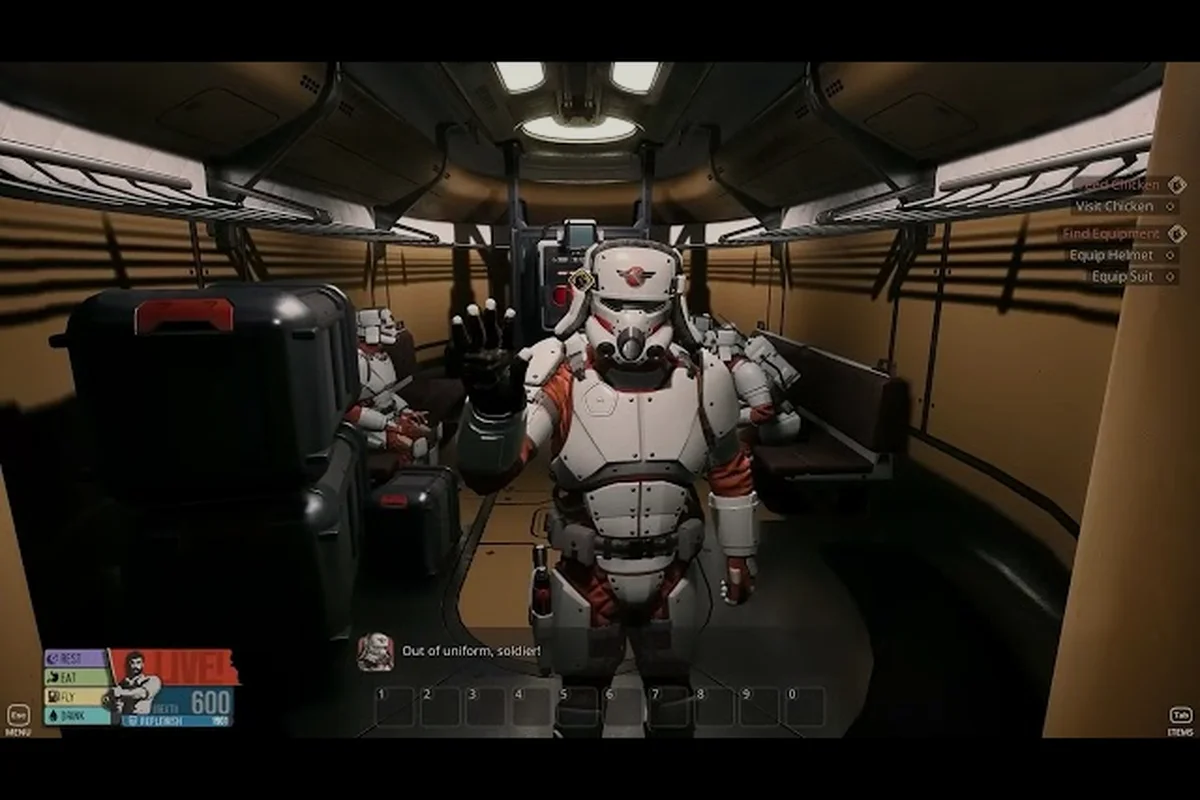
A ship is only as reliable as the routine you build around it. Breathedge 2 ship management is not about owning the biggest hull on day one, but about deciding which systems deserve power, which compartments earn your duct tape, and which controls you actually need to master before the first long haul. Get that loop right and every jump feels planned instead of desperate.
What Breathedge 2 Ship Management Actually Means
The Early Access build frames your vessel as a mobile base rather than a combat fighter. That changes what "good" management looks like. You are balancing oxygen flow, power draw, repair stock, and compartment access every time you leave dock, which means a calm pre-flight routine matters more than a perfect loadout.
The Three-Layer Priority System
Treat ship management as three stacked layers that feed each other. The bottom layer is integrity — hull, oxygen seals, and power conduits. The middle layer is functionality — compartments, storage, and crafting stations. The top layer is mobility — thrusters, navigation, and jump readiness. If the bottom layer fails, nothing else matters.
| Priority Layer | What It Controls | Early Access Signal | Management Habit |
|---|---|---|---|
| Integrity | Hull, oxygen, power | Warning lights, slow leaks | Check after every landing |
| Functionality | Compartments, storage, stations | Locked doors, missing tools | Audit before long trips |
| Mobility | Thrusters, nav, jump drive | Sluggish turns, long charge | Test in low-risk zones |
The official Breathedge 2 Early Access roadmap on Steam confirms that personal spacecraft arrive alongside small flying and ground vehicles, so your management loop will eventually span multiple vehicle types. Building the habit now prevents a scramble when the full version adds planetary surfaces and new zones.
Why Crew Operations Change the Loop
Once crew members board your ship, management stops being a solo checklist. Crew happiness systems interact with compartment comfort, task assignment, and repair frequency. A neglected corridor becomes a morale drain, which reduces task efficiency, which slows repairs, which creates more neglect. Breaking that spiral is the real test of a Breathedge 2 ship guide.
Planning Your First Real Upgrade
Upgrades are tempting, but the wrong order wastes scarce resources. The first hour teaches you that duct tape, scrap metal, and wiring are all competing for the same salvage pool. Spending them on cosmetic compartments before reinforcing the oxygen line is a classic mistake.
Upgrade Sequencing That Prevents Regret
Start with upgrades that reduce future costs. Hull reinforcement cuts repair frequency. Power efficiency modules lower fuel drain. Storage compression makes every salvage run more productive. Cosmetic compartments and decorative stations come last because they consume resources without changing survival odds.
| Upgrade Type | Early Value | Resource Cost | When to Take It |
|---|---|---|---|
| Hull reinforcement | High — fewer repairs | Moderate | Immediately after first dock |
| Power efficiency | High — less fuel | Moderate | Before first long jump |
| Storage compression | Medium — more loot | Low | After first salvage run |
| Compartment comfort | Low — crew only | High | After crew members board |
| Cosmetic options | None — visual only | Variable | Endgame or never |
The key insight is that upgrade timing matters as much as upgrade choice. A hull reinforcement taken after three emergency repairs is more expensive than the same upgrade taken before the first long haul. Think of Breathedge 2 ship upgrades as insurance, not progression.
Reading the Roadmap Before You Commit
The Early Access roadmap explicitly promises "more items, equipment, and ways to interact with the world" in future updates. That means today's endgame compartment might become tomorrow's mid-game necessity. Avoid over-investing in any single system until you see how the developers expand survival mechanics. The companion piece on expanding your ship and equipping compartments goes deeper into which modules hold their value across the planned update cycle.
Managing Compartments Without Overbuilding
Compartments are the most visible part of Breathedge 2 ship management, but they are also the easiest trap. Every new compartment adds mass, power draw, and repair surface area. A ship with ten half-empty rooms flies worse than a ship with five well-stocked ones.
The Compartment Audit
Run this audit before every major expansion. First, list every compartment by daily use frequency. Second, calculate the power cost per use. Third, identify which compartments could be merged or removed. The goal is a ship where every room earns its place.
| Compartment Type | Primary Use | Power Draw | Expansion Priority |
|---|---|---|---|
| Cockpit / bridge | Piloting, nav | Medium | Essential — never cut |
| Oxygen garden | Air recycling | Low | High — reduces consumables |
| Storage bay | Loot, spare parts | Low | Medium — size matters |
| Crafting station | Tools, repairs | High | Medium — only if used daily |
| Crew quarters | Morale, rest | Low | Low — only with crew |
Compartment decisions connect directly to your material strategy. If you are constantly short on duct tape or wiring, the material hunting guide shows which salvage spots actually pay off. Running out of repair stock mid-flight turns a manageable leak into a cascade failure.
Why Empty Compartments Are a Liability
An unused compartment is not neutral. It still consumes oxygen, requires sealing maintenance, and adds mass that slows acceleration. Community reports from the demo period suggest that players who expanded aggressively early hit a wall when fuel costs spiked. The lesson is that Breathedge 2 ship compartments should be earned, not collected.
Learning to Pilot Without Fighting the Controls
No ship management routine survives contact with bad piloting. Breathedge 2 ship controls are intentionally physical — momentum matters, turning takes space, and overcorrection wastes fuel. The players who struggle are usually fighting the physics instead of planning around it. The Normandy-style space coffin drifts like a loaded ore hauler, so cutting thrust early and letting residual velocity carry you into a docking alignment is far cheaper than pulsing the lateral thrusters to cancel drift at the last second. Likewise, pre-turning toward your next nav point before you finish the current burn avoids a wide, fuel-hungry arc that leaves you broadside to debris fields. If you find yourself constantly tapping reverse or firing the brake thrusters to fix overshoots, that is the ship telling you to throttle down a full second earlier and treat every approach as a two-phase maneuver: coast first, correct second.
The Three-Point Control Drill
Practice these three maneuvers in open space before you need them near debris. First, drift braking — cut thrust early and let momentum carry you to a stop. Second, axis-locked rotation — turn on one axis at a time to avoid disorientation. Third, reverse thrust docking — approach the dock slow, then reverse to kill the last bit of drift.
| Control Situation | Common Mistake | Better Approach | Fuel Impact |
|---|---|---|---|
| Approaching dock | Full thrust until close | Cut thrust early, drift | Saves 30-40% fuel |
| Turning in tight space | Multi-axis spin | One axis at a time | Prevents overshoot |
| Avoiding debris | Panic boost | Small vector change | Keeps control |
| Long-distance travel | Constant throttle | Burst and coast | Big fuel savings |
The vehicle controls guide covers how the same physics model translates to ground vehicles and small flyers, which matters because the full version will ask you to switch between them without retraining your instincts. Piloting consistency across vehicle types is a hidden survival skill.
When to Override Automation
Your ship includes assist systems that handle stability, collision warning, and course correction. In calm zones, they save attention. In debris fields or combat, they can fight you. Learning when to turn assists off is part of knowing how to pilot the ship well. Community testing suggests that manual control wins in dense asteroid clusters, while automation excels on long empty hauls.
Advanced Habits for Long-Term Ship Health
The players who keep their ship flying for dozens of hours do not rely on memory. They build checklists, stock thresholds, and pre-flight rituals that catch problems while they are cheap. This is where Breathedge 2 ship management shifts from reactive to preventive.
The Five-Minute Pre-Flight Routine
Run this every time you undock, no exceptions. Check oxygen reserves — a slow leak drains faster than you think. Check repair stock — carry at least two emergency patches. Check fuel gauge against route — plan a reserve of 25%. Check compartment locks — unsealed doors leak atmosphere. Check the chicken — the Immortal Chicken has opinions about ship hygiene, and ignoring them has consequences.
| Check | What to Look For | Cheap Fix | Expensive Ignore |
|---|---|---|---|
| Oxygen | Reserve below 30% | Refill before departure | Mid-flight suffocation risk |
| Repair stock | Less than 2 patches | Salvage run first | Stranded with hull breach |
| Fuel | Route needs more than 75% | Shorter route or refuel | Dead in space |
| Compartments | Unsealed doors | Close and lock | Oxygen bleed, crew panic |
| Chicken | Agitated behavior | Feed or interact | Morale collapse, sabotage |
This routine is not busywork. It is the difference between a controlled jump and a panic sequence where you are patching a hull breach with one hand while the crew morale meter hits zero with the other. In Breathedge 2, a controlled jump means every ship compartment is sealed and powered in the correct priority order — oxygen first, then the navigational console, then engines — because a single misaligned module during the jump animation can trigger the vacuum-exposure penalty loop that drains both suit integrity and morale simultaneously. The panic sequence, by contrast, forces you to abandon the pilot seat mid-jump to chase down a sparking wire in the engineering section, and that ten-second delay is often enough to cascade into a full ship-wide systems failure before the next star system loads.
Stock Thresholds That Prevent Emergencies
Set minimums and treat them as law. Duct tape: 10 units. Wiring: 8 units. Oxygen canisters: 3 spare. Fuel cells: 1 full reserve. When any stock drops below threshold, the next trip is a salvage run, not a story mission. This simple rule eliminates most emergency repairs because you never leave dock already behind.
The beginner survival guide reinforces these same thresholds for the early game, which matters because habits formed in the first five hours carry through the entire Early Access period. Ship management is a rhythm, not a reaction.
Frequently Asked Questions
Does Breathedge 2 ship management change with crew members on board?
Yes. Crew members add morale, task efficiency, and repair burden to every compartment decision. A ship that runs fine solo needs better oxygen flow, more comfort stations, and cleaner corridors once crew arrive. Community reports suggest that crew happiness drops faster on cramped, messy ships.
What should I upgrade first on my ship?
Prioritize hull reinforcement and power efficiency before cosmetic compartments. These two upgrades reduce your ongoing repair and fuel costs, which frees resources for everything else. Taking them early compounds over the entire Early Access period and pays for itself within a few salvage runs.
How do Breathedge 2 ship controls differ from the original game?
The sequel keeps momentum-based physics but adds more assist options and a clearer docking flow. Players report that turning feels heavier, which rewards planning your vector changes earlier. Manual control beats automation in debris fields, while automation helps on long empty stretches.
Can I manage multiple ships at once?
Not in the current Early Access build. The roadmap includes a personal spacecraft plus smaller flying and ground vehicles, but the management loop centers on one main vessel. Expanding that ship matters more than collecting hulls—each compartment draws from the same power and oxygen grid, so overbuilding without upgrading the generator can leave the fabricator unpowered.
Is ship management worth the time investment early on?
Yes, because the loop is preventive. Five minutes of pre-flight checks saves twenty minutes of emergency repair later. The resource savings compound, which means a player who manages well at hour five enters hour twenty with a stronger ship and a larger material stockpile.